A Palette Drawn From the Arabian Peninsula
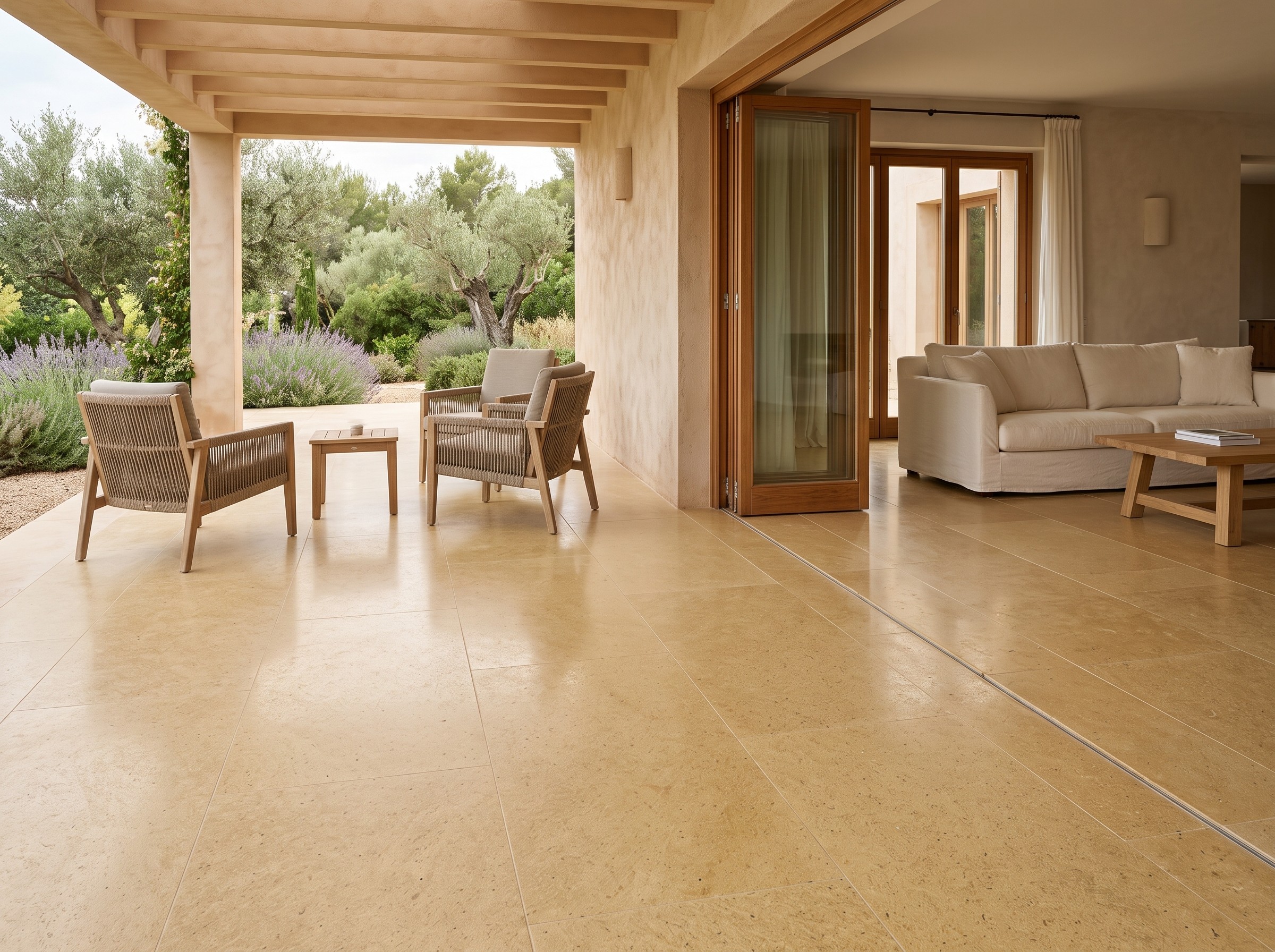
Al Takadom’s collections are not a random catalogue. They are a curated palette of natural stones drawn from the geology of the Arabian Peninsula, each with a distinct colour, movement, and best use.
Understanding the family as a whole is the first step to specifying the right piece. When you can see how the collections relate to one another, choosing between them becomes a design decision rather than a guess.
Broadly, the range spans two great families: expressive granites and marbles with strong colour and movement, and calm limestones whose quiet neutrality suits large surfaces. Most projects draw from both, the expressive stones for moments of drama, the limestones for the quiet expanses in between.
Al Takadom’s collections are not a random catalogue. They are a curated palette of natural stones drawn from the geology of the Arabian Peninsula, each with a distinct colour, movement, and best use.
Understanding the family as a whole is the first step to specifying the right piece. When you can see how the collections relate to one another, choosing between them becomes a design decision rather than a guess.
Broadly, the range spans two great families: expressive granites and marbles with strong colour and movement, and calm limestones whose quiet neutrality suits large surfaces. Most projects draw from both, the expressive stones for moments of drama, the limestones for the quiet expanses in between.
The Signature Colour Collections
The colour collections are where the character lives. Each is named for the tone and feeling it brings to a space, and each has a personality that a good designer learns to recognise on sight.
The signature range gives a designer a full spectrum of moods to work with:
Saudi Bianco: a near-white neutral that creates expansiveness and light
Brown Najran: a golden-brown warmth that creates intimacy
Royal Gold: a rich, luminous tone for statement surfaces
Rania Green: a cool, characterful green with natural depth
Golden Leaf: warm veining with organic movement
Sweet Pink: a soft, warm blush for refined interiors
Tropical Najran: a lively, layered pattern with strong movement
No single collection is better than another; each is the right answer to a different question. The art of specification is matching the collection’s character to the intention of the space.
The colour collections are where the character lives. Each is named for the tone and feeling it brings to a space, and each has a personality that a good designer learns to recognise on sight.
The signature range gives a designer a full spectrum of moods to work with:
Saudi Bianco: a near-white neutral that creates expansiveness and light
Brown Najran: a golden-brown warmth that creates intimacy
Royal Gold: a rich, luminous tone for statement surfaces
Rania Green: a cool, characterful green with natural depth
Golden Leaf: warm veining with organic movement
Sweet Pink: a soft, warm blush for refined interiors
Tropical Najran: a lively, layered pattern with strong movement
No single collection is better than another; each is the right answer to a different question. The art of specification is matching the collection’s character to the intention of the space.
The Limestone Family
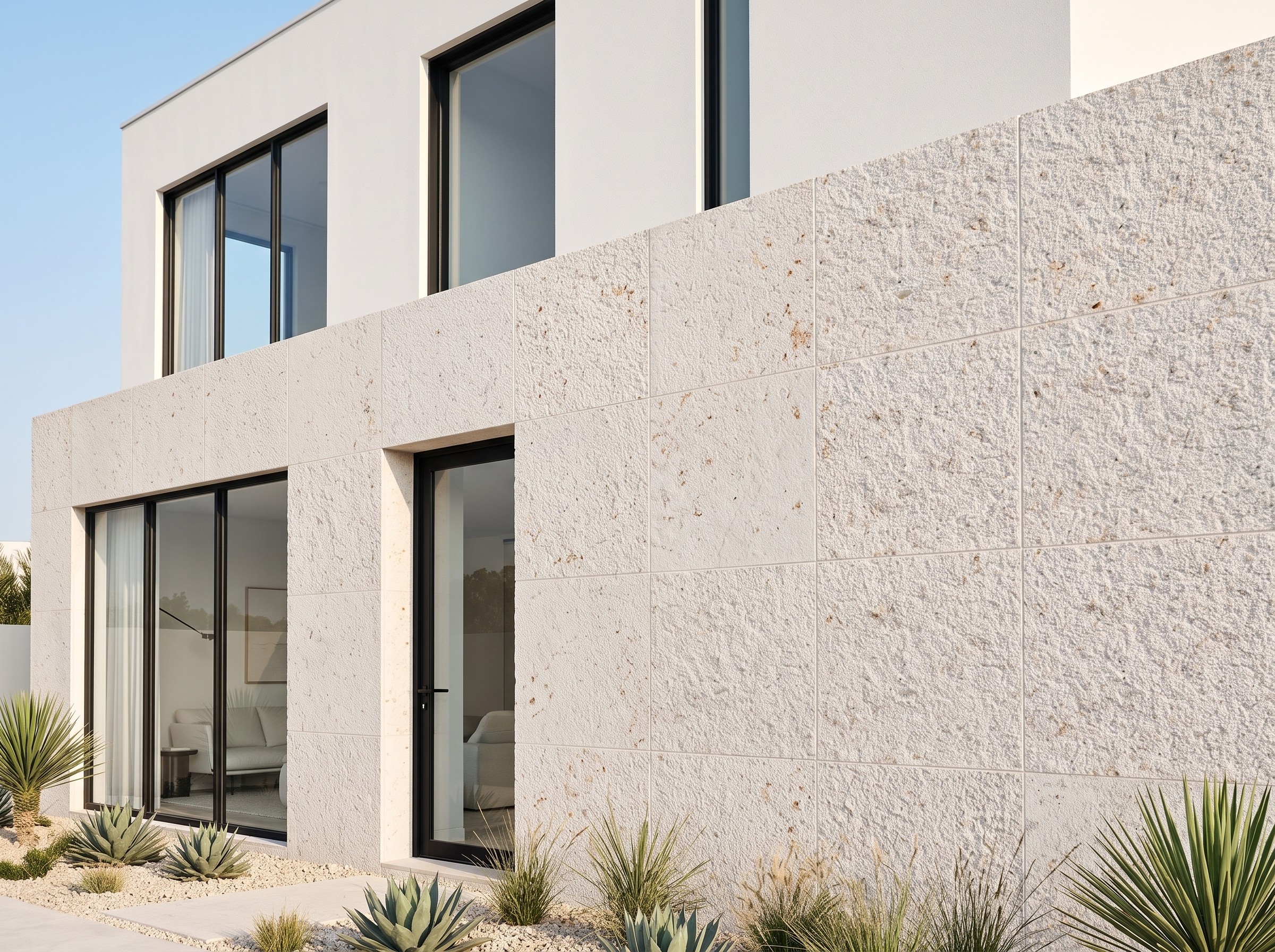
Where the colour collections make a statement, the limestones provide the calm, continuous surfaces that architecture so often needs. They are the quiet backbone of large-scale work.
Al Takadom’s limestone family includes Beige Limestone, Yellow Limestone, and the regional Qassim Yellow Limestone. Each carries the soft, warm neutrality that reads well across an entire facade or plaza without becoming busy or overwhelming.
These stones are the workhorses of large facades, plazas, and public realm projects, understated, durable, and forgiving of scale. Their restraint is precisely what makes them so useful: they let architecture speak without competing with it.
Where the colour collections make a statement, the limestones provide the calm, continuous surfaces that architecture so often needs. They are the quiet backbone of large-scale work.
Al Takadom’s limestone family includes Beige Limestone, Yellow Limestone, and the regional Qassim Yellow Limestone. Each carries the soft, warm neutrality that reads well across an entire facade or plaza without becoming busy or overwhelming.
These stones are the workhorses of large facades, plazas, and public realm projects, understated, durable, and forgiving of scale. Their restraint is precisely what makes them so useful: they let architecture speak without competing with it.
Reading Tone, Movement, and Grain
Every natural stone communicates through three visual qualities, and learning to read them makes selection far easier. Once you can name what you are seeing, you can compare stones objectively instead of relying on a vague first impression.
Tone is the base colour, warm or cool, light or dark. It sets the emotional temperature of a space before anything else registers. Movement is the pattern of veining and variation across the surface, from near-uniform to dramatically expressive. Grain is the fineness or coarseness of the texture when you look closely, and it affects how the stone feels as much as how it looks.
A stone that is right in tone but wrong in movement can still be wrong for the space, which is why physical samples matter so much. A photograph flattens all three qualities; only a real sample, seen in the actual light of the room, tells the whole truth.
Every natural stone communicates through three visual qualities, and learning to read them makes selection far easier. Once you can name what you are seeing, you can compare stones objectively instead of relying on a vague first impression.
Tone is the base colour, warm or cool, light or dark. It sets the emotional temperature of a space before anything else registers. Movement is the pattern of veining and variation across the surface, from near-uniform to dramatically expressive. Grain is the fineness or coarseness of the texture when you look closely, and it affects how the stone feels as much as how it looks.
A stone that is right in tone but wrong in movement can still be wrong for the space, which is why physical samples matter so much. A photograph flattens all three qualities; only a real sample, seen in the actual light of the room, tells the whole truth.
Matching Collection to Tone at a Glance
To make first selection quicker, it helps to pair a design intention with a natural starting point in the range. This is not a rulebook, it is a shortcut to the right part of the palette.
Design intention | Start with |
|---|---|
Bright, expansive, minimal | Saudi Bianco, Beige Limestone |
Warm and intimate | Brown Najran, Sweet Pink |
Luxurious and expressive | Royal Gold, Golden Leaf |
Cool and characterful | Rania Green |
Large facades and public realm | Yellow & Qassim Limestone |
Use the table to narrow the field to two or three candidates, then let real samples make the final decision.
To make first selection quicker, it helps to pair a design intention with a natural starting point in the range. This is not a rulebook, it is a shortcut to the right part of the palette.
Design intention | Start with |
|---|---|
Bright, expansive, minimal | Saudi Bianco, Beige Limestone |
Warm and intimate | Brown Najran, Sweet Pink |
Luxurious and expressive | Royal Gold, Golden Leaf |
Cool and characterful | Rania Green |
Large facades and public realm | Yellow & Qassim Limestone |
Use the table to narrow the field to two or three candidates, then let real samples make the final decision.
Every Collection, Multiple Finishes
A collection is only half the specification. Each stone is available in a range of finishes, and the finish changes its character as dramatically as the colour does.
The same Brown Najran can read as a glossy feature wall when polished or as a slip-resistant pool surround when flamed. In practice, the collection and the finish are two dials you turn together to arrive at exactly the surface a space needs.
The right way to think about the range is as a grid: the collection sets the colour, the finish sets the mood and the performance. Learning to think in both dimensions at once is what separates a confident specification from a hesitant one.
A collection is only half the specification. Each stone is available in a range of finishes, and the finish changes its character as dramatically as the colour does.
The same Brown Najran can read as a glossy feature wall when polished or as a slip-resistant pool surround when flamed. In practice, the collection and the finish are two dials you turn together to arrive at exactly the surface a space needs.
The right way to think about the range is as a grid: the collection sets the colour, the finish sets the mood and the performance. Learning to think in both dimensions at once is what separates a confident specification from a hesitant one.
How to Choose With Confidence
When narrowing a selection, work through a simple sequence rather than choosing on looks alone. A repeatable process protects you from the most common and most expensive mistake, choosing with your eyes and only later discovering the practical consequences.
Define the emotional intention of the space
Shortlist by tone from the collections above
Confirm movement and grain against a real sample
Select the finish for the application and light
Verify performance data for the environment
Followed in order, this sequence turns a room full of beautiful options into a single, defensible choice.
When narrowing a selection, work through a simple sequence rather than choosing on looks alone. A repeatable process protects you from the most common and most expensive mistake, choosing with your eyes and only later discovering the practical consequences.
Define the emotional intention of the space
Shortlist by tone from the collections above
Confirm movement and grain against a real sample
Select the finish for the application and light
Verify performance data for the environment
Followed in order, this sequence turns a room full of beautiful options into a single, defensible choice.