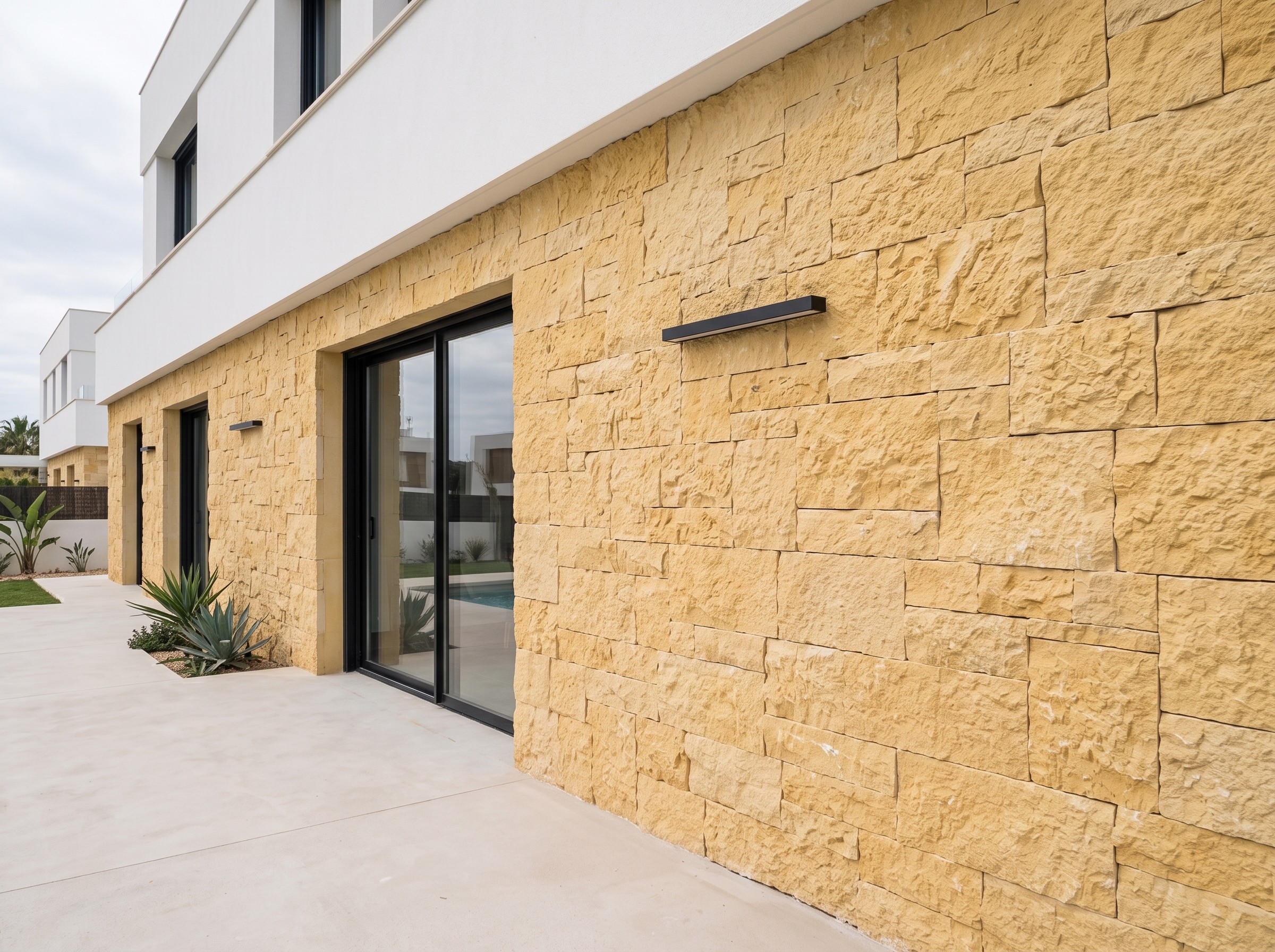
What Vertical Integration Actually Means for Your Project
Most stone you can buy has passed through several hands before it reaches a project: a quarry operator, a block trader, a processing plant, a distributor. Every handover adds cost, adds time, and quietly removes accountability, because each party can point to the one before it when something goes wrong.
Al Takadom is built the opposite way. The company owns and controls the full chain, from the mountain to the finished panel. Nothing is subcontracted to an anonymous third party, and no critical decision is made outside the organisation.
For an architect or contractor, this is not an abstract advantage. It means one accountable partner for origin, consistency, documentation, and delivery, a single team that can answer for the material at every stage of its life.
Most stone you can buy has passed through several hands before it reaches a project: a quarry operator, a block trader, a processing plant, a distributor. Every handover adds cost, adds time, and quietly removes accountability, because each party can point to the one before it when something goes wrong.
Al Takadom is built the opposite way. The company owns and controls the full chain, from the mountain to the finished panel. Nothing is subcontracted to an anonymous third party, and no critical decision is made outside the organisation.
For an architect or contractor, this is not an abstract advantage. It means one accountable partner for origin, consistency, documentation, and delivery, a single team that can answer for the material at every stage of its life.
Stage One: The Quarry
Everything begins at the quarry, where the company’s mining division extracts raw blocks directly from the earth, over 100,000 cubic metres each year. This is the foundation of the whole operation, and it is the stage most producers never control.
Extraction is a careful, engineered process, not a blunt one. Blocks are selectively cut to preserve the soundness and colour consistency of the material, because a flaw introduced at the quarry can ruin a slab that has already absorbed hours of downstream work.
Because Al Takadom operates its own quarries, it can select blocks for a specific project’s colour and character, a level of control impossible when buying blocks on the open market. Two orders from the same seam can be matched deliberately, rather than left to chance.
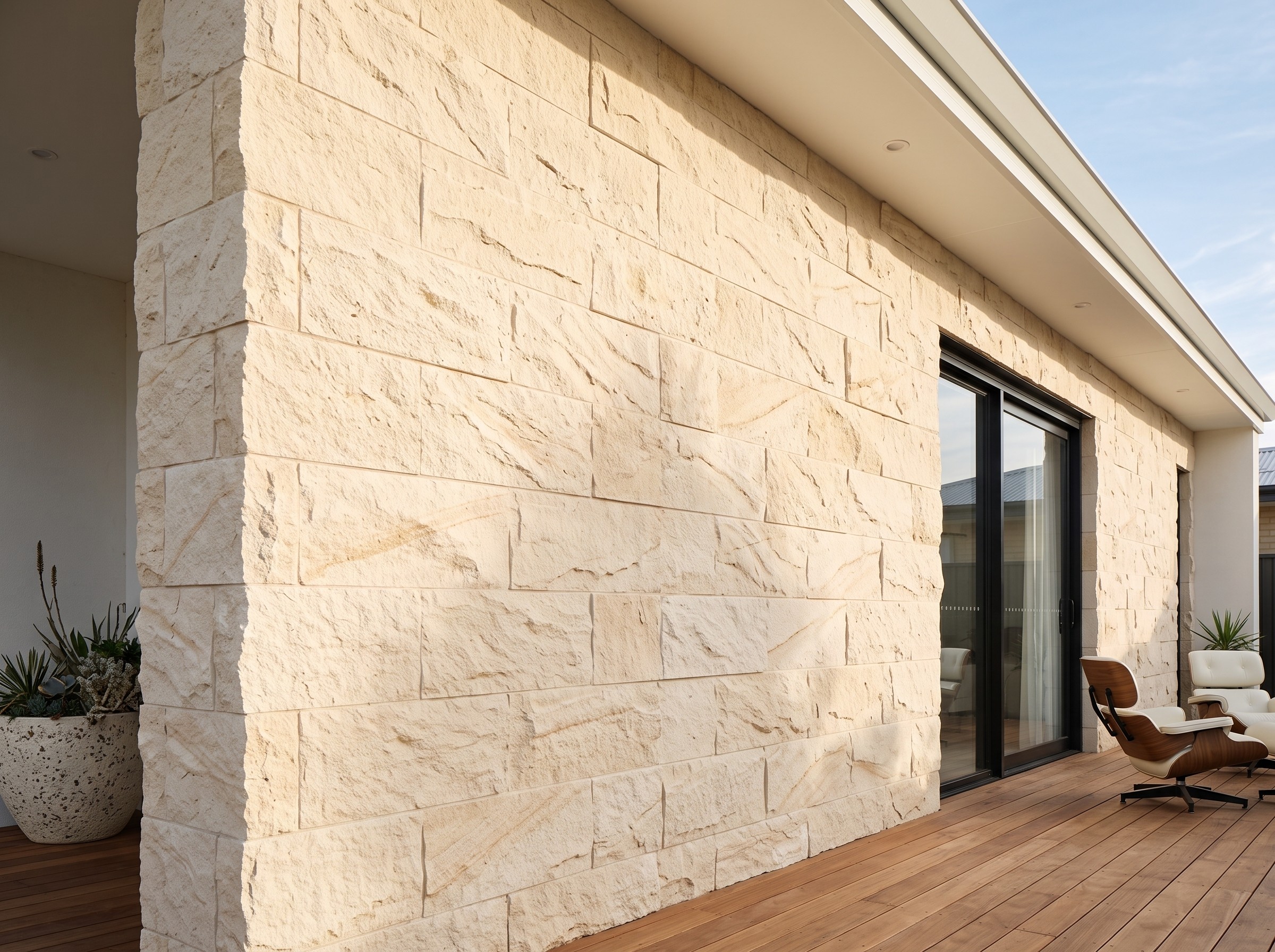
Everything begins at the quarry, where the company’s mining division extracts raw blocks directly from the earth, over 100,000 cubic metres each year. This is the foundation of the whole operation, and it is the stage most producers never control.
Extraction is a careful, engineered process, not a blunt one. Blocks are selectively cut to preserve the soundness and colour consistency of the material, because a flaw introduced at the quarry can ruin a slab that has already absorbed hours of downstream work.
Because Al Takadom operates its own quarries, it can select blocks for a specific project’s colour and character, a level of control impossible when buying blocks on the open market. Two orders from the same seam can be matched deliberately, rather than left to chance.
Stage Two: Sawing and Calibration
Raw blocks travel to the processing plant, where Italian-heritage machinery saws them into slabs and tiles. This is where precision becomes measurable, and where the difference between a good producer and an average one becomes obvious.
Modern gang saws and calibrating lines hold thickness and flatness to tight tolerances so that pieces arrive on site ready to install rather than needing rework. On a large project, that consistency saves days of labour and prevents the small mismatches that undermine a finished surface.
The typical production journey follows a clear, repeatable sequence:
Block inspection and orientation
Primary sawing into slabs
Calibration to consistent thickness
Surface finishing
Cutting to size, edging, and quality control
Raw blocks travel to the processing plant, where Italian-heritage machinery saws them into slabs and tiles. This is where precision becomes measurable, and where the difference between a good producer and an average one becomes obvious.
Modern gang saws and calibrating lines hold thickness and flatness to tight tolerances so that pieces arrive on site ready to install rather than needing rework. On a large project, that consistency saves days of labour and prevents the small mismatches that undermine a finished surface.
The typical production journey follows a clear, repeatable sequence:
Block inspection and orientation
Primary sawing into slabs
Calibration to consistent thickness
Surface finishing
Cutting to size, edging, and quality control
Stage Three: Finishing
The same stone can become several different materials depending on how its surface is treated. This is one of the most under-appreciated facts about natural stone, and it is where a producer’s range really shows.
Al Takadom produces a full range of finishes in-house, polished, honed, flamed, brushed, bush-hammered, and rock-face, each suited to different applications and light conditions. A single collection can therefore serve a glossy interior wall and a slip-resistant terrace without ever leaving the same source material.
Producing finishes in-house means a project can specify a single stone in multiple finishes and trust that the colour will match across all of them, because it all came from the same blocks. That colour continuity is almost impossible to guarantee when finishing is outsourced to different workshops.
The same stone can become several different materials depending on how its surface is treated. This is one of the most under-appreciated facts about natural stone, and it is where a producer’s range really shows.
Al Takadom produces a full range of finishes in-house, polished, honed, flamed, brushed, bush-hammered, and rock-face, each suited to different applications and light conditions. A single collection can therefore serve a glossy interior wall and a slip-resistant terrace without ever leaving the same source material.
Producing finishes in-house means a project can specify a single stone in multiple finishes and trust that the colour will match across all of them, because it all came from the same blocks. That colour continuity is almost impossible to guarantee when finishing is outsourced to different workshops.
Stage Four: Cut-to-Size and Quality Control
For architectural work, standard slabs are only the starting point. Real projects need specific pieces in specific dimensions, and that is where cut-to-size fabrication becomes essential.
The company’s cut-to-size operation fabricates pieces to exact drawings, cladding panels, treads, copings, countertops, and custom formats, then checks them against specification before they leave the plant. Each piece is made to fit its place in the building rather than trimmed to fit on site.
Quality control at this stage is what protects a project’s programme. A panel that is out of tolerance is caught in the factory, under controlled conditions, not discovered on a scaffold where correcting it is slow, costly, and disruptive.
For architectural work, standard slabs are only the starting point. Real projects need specific pieces in specific dimensions, and that is where cut-to-size fabrication becomes essential.
The company’s cut-to-size operation fabricates pieces to exact drawings, cladding panels, treads, copings, countertops, and custom formats, then checks them against specification before they leave the plant. Each piece is made to fit its place in the building rather than trimmed to fit on site.
Quality control at this stage is what protects a project’s programme. A panel that is out of tolerance is caught in the factory, under controlled conditions, not discovered on a scaffold where correcting it is slow, costly, and disruptive.
Why It Matters: Integration Versus Distribution
The difference between a vertically integrated producer and a distributor becomes obvious when you compare them directly, side by side, across the things a project actually cares about.
Consideration | Distributor / reseller | Al Takadom (integrated) |
|---|---|---|
Origin control | Variable, often unknown | Own quarries |
Colour consistency | Batch to batch risk | Blocks selected together |
Custom formats | Outsourced | In-house cut-to-size |
Test documentation | Rarely available | Certified data on request |
None of these differences are visible in a small sample on a showroom shelf. They only reveal themselves at scale, which is exactly when they matter most.
The difference between a vertically integrated producer and a distributor becomes obvious when you compare them directly, side by side, across the things a project actually cares about.
Consideration | Distributor / reseller | Al Takadom (integrated) |
|---|---|---|
Origin control | Variable, often unknown | Own quarries |
Colour consistency | Batch to batch risk | Blocks selected together |
Custom formats | Outsourced | In-house cut-to-size |
Test documentation | Rarely available | Certified data on request |
None of these differences are visible in a small sample on a showroom shelf. They only reveal themselves at scale, which is exactly when they matter most.
One Partner, Full Accountability
When every stage sits inside one company, responsibility cannot be passed along. There is no gap between the quarry and the factory, or between the factory and the delivery, where accountability can quietly disappear.
If a project needs a specific finish, a tighter tolerance, or engineering documentation, there is a single team that can deliver it and stand behind it. Questions get answered by the people who actually control the outcome, not by an intermediary relaying messages up a chain.
That is the practical meaning of vertical integration: fewer variables, fewer surprises, and a material you can specify with confidence from the first drawing to the final delivery.
When every stage sits inside one company, responsibility cannot be passed along. There is no gap between the quarry and the factory, or between the factory and the delivery, where accountability can quietly disappear.
If a project needs a specific finish, a tighter tolerance, or engineering documentation, there is a single team that can deliver it and stand behind it. Questions get answered by the people who actually control the outcome, not by an intermediary relaying messages up a chain.
That is the practical meaning of vertical integration: fewer variables, fewer surprises, and a material you can specify with confidence from the first drawing to the final delivery.