
Not a Showroom, a Production Partner
Al Takadom is not structured as a retail stone showroom. It is a vertically integrated industrial producer that works directly with architects, contractors, and developers on projects of genuine scale.
For designers who need cut-to-size production, custom formats, or specific finish profiles, that direct relationship is the most efficient route to a successful specification. There is no layer of retail translation between what the designer wants and what the factory makes.
Working with the producer, rather than a middleman, removes the guesswork from the most technical part of a project. The people who answer your questions are the people who control the outcome.
Al Takadom is not structured as a retail stone showroom. It is a vertically integrated industrial producer that works directly with architects, contractors, and developers on projects of genuine scale.
For designers who need cut-to-size production, custom formats, or specific finish profiles, that direct relationship is the most efficient route to a successful specification. There is no layer of retail translation between what the designer wants and what the factory makes.
Working with the producer, rather than a middleman, removes the guesswork from the most technical part of a project. The people who answer your questions are the people who control the outcome.
What the Direct Relationship Gives You
Partnering directly with the manufacturer unlocks a set of advantages that a reseller simply cannot provide. These are the practical tools a serious specification depends on.
Chief among them are:
Technical advice on material selection relative to project-specific performance requirements
Certified laboratory test data for specifications that require engineering documentation
Sample production in the exact finish and format the project demands
Cut-to-size manufacturing for precise architectural dimensions
Together, these turn the supplier from a vendor of slabs into a genuine partner in the design, one invested in getting the details right.
Partnering directly with the manufacturer unlocks a set of advantages that a reseller simply cannot provide. These are the practical tools a serious specification depends on.
Chief among them are:
Technical advice on material selection relative to project-specific performance requirements
Certified laboratory test data for specifications that require engineering documentation
Sample production in the exact finish and format the project demands
Cut-to-size manufacturing for precise architectural dimensions
Together, these turn the supplier from a vendor of slabs into a genuine partner in the design, one invested in getting the details right.
From Drawing to Delivered Panel
Cut-to-size is where architectural intent becomes physical material. It is the difference between buying stone and commissioning exactly the pieces a building needs.
Rather than buying standard slabs and cutting them on site, the factory fabricates each piece, cladding panels, treads, copings, countertops, to the project’s drawings, then checks them against specification before dispatch. The work is done under controlled conditions, by people who do it every day.
This shifts risk off the construction site and into the controlled environment of the plant, where errors are caught early and corrected cheaply. A mistake found in the factory is an inconvenience; the same mistake found on a scaffold is a delay.
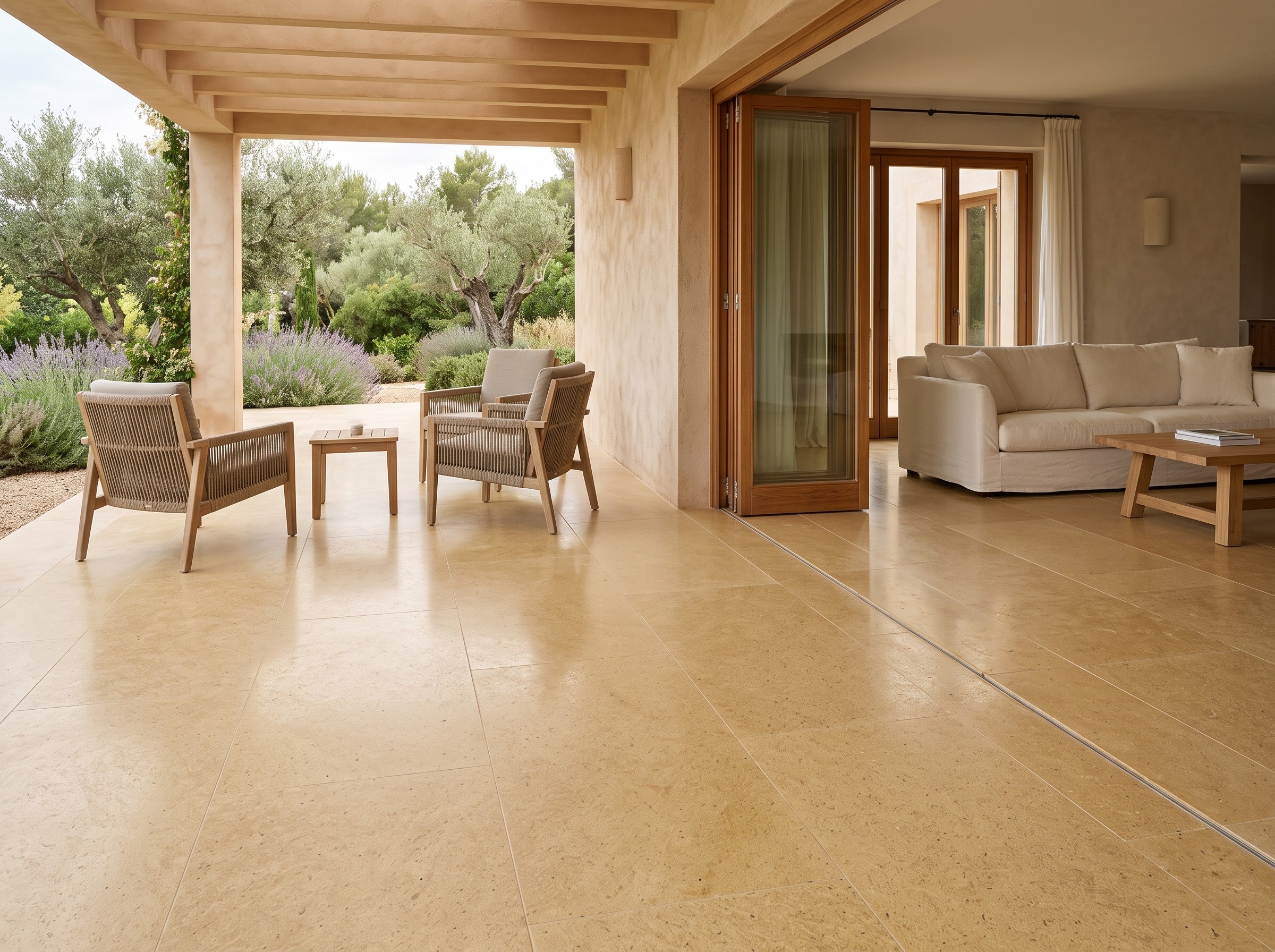
Cut-to-size is where architectural intent becomes physical material. It is the difference between buying stone and commissioning exactly the pieces a building needs.
Rather than buying standard slabs and cutting them on site, the factory fabricates each piece, cladding panels, treads, copings, countertops, to the project’s drawings, then checks them against specification before dispatch. The work is done under controlled conditions, by people who do it every day.
This shifts risk off the construction site and into the controlled environment of the plant, where errors are caught early and corrected cheaply. A mistake found in the factory is an inconvenience; the same mistake found on a scaffold is a delay.
A Clear Path Through Specification
A specification runs most smoothly when it follows a defined sequence. Skipping steps or reordering them is where confusion and rework usually creep in.
For a natural-stone package, that path looks like this:
Share the design intent, environment, and quantities
Shortlist collections by tone and movement
Confirm finish and request certified performance data
Approve physical samples in the chosen finish
Issue cut-to-size drawings for fabrication
Schedule production and phased delivery
Followed in order, this path takes a project from a first idea to a delivered, installed surface with a minimum of surprises along the way.
A specification runs most smoothly when it follows a defined sequence. Skipping steps or reordering them is where confusion and rework usually creep in.
For a natural-stone package, that path looks like this:
Share the design intent, environment, and quantities
Shortlist collections by tone and movement
Confirm finish and request certified performance data
Approve physical samples in the chosen finish
Issue cut-to-size drawings for fabrication
Schedule production and phased delivery
Followed in order, this path takes a project from a first idea to a delivered, installed surface with a minimum of surprises along the way.
The Information That Speeds Everything Up
The fastest specifications share complete information early. A conversation that starts with the full picture avoids the slow, costly back-and-forth of details revealed one at a time.
Bringing the right details to the first conversation makes everything downstream easier:
Provide | Why it matters |
|---|---|
Application & environment | Drives finish and performance needs |
Total quantity (m²) | Determines block selection & scheduling |
Dimensions & tolerances | Enables accurate cut-to-size |
Programme dates | Aligns production with the site |
None of this information is hard to gather, and providing it up front can save weeks later in the programme.
The fastest specifications share complete information early. A conversation that starts with the full picture avoids the slow, costly back-and-forth of details revealed one at a time.
Bringing the right details to the first conversation makes everything downstream easier:
Provide | Why it matters |
|---|---|
Application & environment | Drives finish and performance needs |
Total quantity (m²) | Determines block selection & scheduling |
Dimensions & tolerances | Enables accurate cut-to-size |
Programme dates | Aligns production with the site |
None of this information is hard to gather, and providing it up front can save weeks later in the programme.
Designing for Manufacture
The best results come when specifiers design with the material’s realities in mind, sensible panel sizes, achievable tolerances, and finishes matched to their environment. Stone is generous, but it has limits, and working with them produces better buildings than fighting them.
Al Takadom’s technical team can advise on all of these before the drawings are frozen, which is exactly when that advice is most valuable. A suggestion made at the design stage costs nothing; the same suggestion after fabrication has begun can be expensive to act on.
A short conversation early can prevent an expensive change late. That is perhaps the single most useful habit a specifier can adopt when working with natural stone.
The best results come when specifiers design with the material’s realities in mind, sensible panel sizes, achievable tolerances, and finishes matched to their environment. Stone is generous, but it has limits, and working with them produces better buildings than fighting them.
Al Takadom’s technical team can advise on all of these before the drawings are frozen, which is exactly when that advice is most valuable. A suggestion made at the design stage costs nothing; the same suggestion after fabrication has begun can be expensive to act on.
A short conversation early can prevent an expensive change late. That is perhaps the single most useful habit a specifier can adopt when working with natural stone.
One Team, From Selection to Site
Because everything happens under one roof, quarrying, processing, finishing, and fabrication, the architect deals with a single accountable team from first sample to final delivery.
That continuity is the quiet reason integrated producers are so well suited to complex, high-stakes projects. There is no moment where the work is handed to a stranger who was not part of the earlier conversations.
Fewer handovers mean fewer places for a specification to go wrong, and fewer people who can disclaim responsibility when it does. For a demanding project, that single line of accountability is worth a great deal.
Because everything happens under one roof, quarrying, processing, finishing, and fabrication, the architect deals with a single accountable team from first sample to final delivery.
That continuity is the quiet reason integrated producers are so well suited to complex, high-stakes projects. There is no moment where the work is handed to a stranger who was not part of the earlier conversations.
Fewer handovers mean fewer places for a specification to go wrong, and fewer people who can disclaim responsibility when it does. For a demanding project, that single line of accountability is worth a great deal.