
Beauty Is the Beginning; Data Is the Guarantee
A stone that looks extraordinary in a sample and performs poorly once installed is not a good choice, it is an expensive problem that reveals itself slowly, long after the decision has been made and the budget spent.
The designers who work most successfully with natural stone start with beauty and end with data. They allow themselves to fall in love with a surface, and then they insist on proving that it will survive its environment. Neither step alone is enough.
Al Takadom produces certified laboratory test data for its stone precisely because specification decisions should rest on measured performance, not appearance alone. This is the technical language every serious specification should be able to speak.
A stone that looks extraordinary in a sample and performs poorly once installed is not a good choice, it is an expensive problem that reveals itself slowly, long after the decision has been made and the budget spent.
The designers who work most successfully with natural stone start with beauty and end with data. They allow themselves to fall in love with a surface, and then they insist on proving that it will survive its environment. Neither step alone is enough.
Al Takadom produces certified laboratory test data for its stone precisely because specification decisions should rest on measured performance, not appearance alone. This is the technical language every serious specification should be able to speak.
The Properties That Actually Matter
A handful of measured properties determine whether a stone will thrive in its environment. You do not need to be a materials scientist to use them, you only need to know which number matters most for the job at hand.
The most important properties, and what each one tells you, are these:
Compressive strength: how much load the stone can bear before failing
Water absorption: how porous the stone is, which drives staining and freeze risk
Flexural strength & modulus of rupture: resistance to bending, critical for cladding and treads
Abrasion resistance: how well a floor holds up to foot traffic over time
Density: a strong indicator of durability and weight loading
Each property maps to a real-world risk. Reading them together gives you a complete picture of how a stone will behave over decades, not just how it looks on day one.
A handful of measured properties determine whether a stone will thrive in its environment. You do not need to be a materials scientist to use them, you only need to know which number matters most for the job at hand.
The most important properties, and what each one tells you, are these:
Compressive strength: how much load the stone can bear before failing
Water absorption: how porous the stone is, which drives staining and freeze risk
Flexural strength & modulus of rupture: resistance to bending, critical for cladding and treads
Abrasion resistance: how well a floor holds up to foot traffic over time
Density: a strong indicator of durability and weight loading
Each property maps to a real-world risk. Reading them together gives you a complete picture of how a stone will behave over decades, not just how it looks on day one.
Compressive Strength, in Context
Compressive strength is measured in megapascals (MPa), the pressure the material withstands before crushing. It is the headline figure for anything that has to carry weight or survive heavy use.
Al Takadom’s premium stone reaches a maximum compressive strength of around 158 MPa, which is exceptional for natural stone and comfortably suited to demanding structural and paving applications. That figure is not a marketing claim; it is a measured, certifiable property.
To put that number in perspective, it helps to compare it against other common building materials:
Material | Typical compressive strength |
|---|---|
Standard concrete | 20–40 MPa |
Many limestones | 60–120 MPa |
Premium granite | 120–200 MPa |
Al Takadom premium stone | Up to ~158 MPa |
Compressive strength is measured in megapascals (MPa), the pressure the material withstands before crushing. It is the headline figure for anything that has to carry weight or survive heavy use.
Al Takadom’s premium stone reaches a maximum compressive strength of around 158 MPa, which is exceptional for natural stone and comfortably suited to demanding structural and paving applications. That figure is not a marketing claim; it is a measured, certifiable property.
To put that number in perspective, it helps to compare it against other common building materials:
Material | Typical compressive strength |
|---|---|
Standard concrete | 20–40 MPa |
Many limestones | 60–120 MPa |
Premium granite | 120–200 MPa |
Al Takadom premium stone | Up to ~158 MPa |
Water Absorption and Why It Governs So Much
Water absorption is expressed as a percentage of weight, and it quietly governs more of a stone’s behaviour than any other single figure. A low value means a dense, less porous stone that resists staining, is easier to maintain, and performs better in wet or freeze-prone environments.
It is one of the single most useful numbers when choosing stone for bathrooms, pool surrounds, and exteriors, because water is the agent behind so many long-term failures, from unsightly staining to the slow damage of repeated freezing and thawing.
As a rule of thumb, the lower the absorption, the more forgiving the stone will be over its service life. It is the property that most often separates a surface that still looks good in twenty years from one that does not.
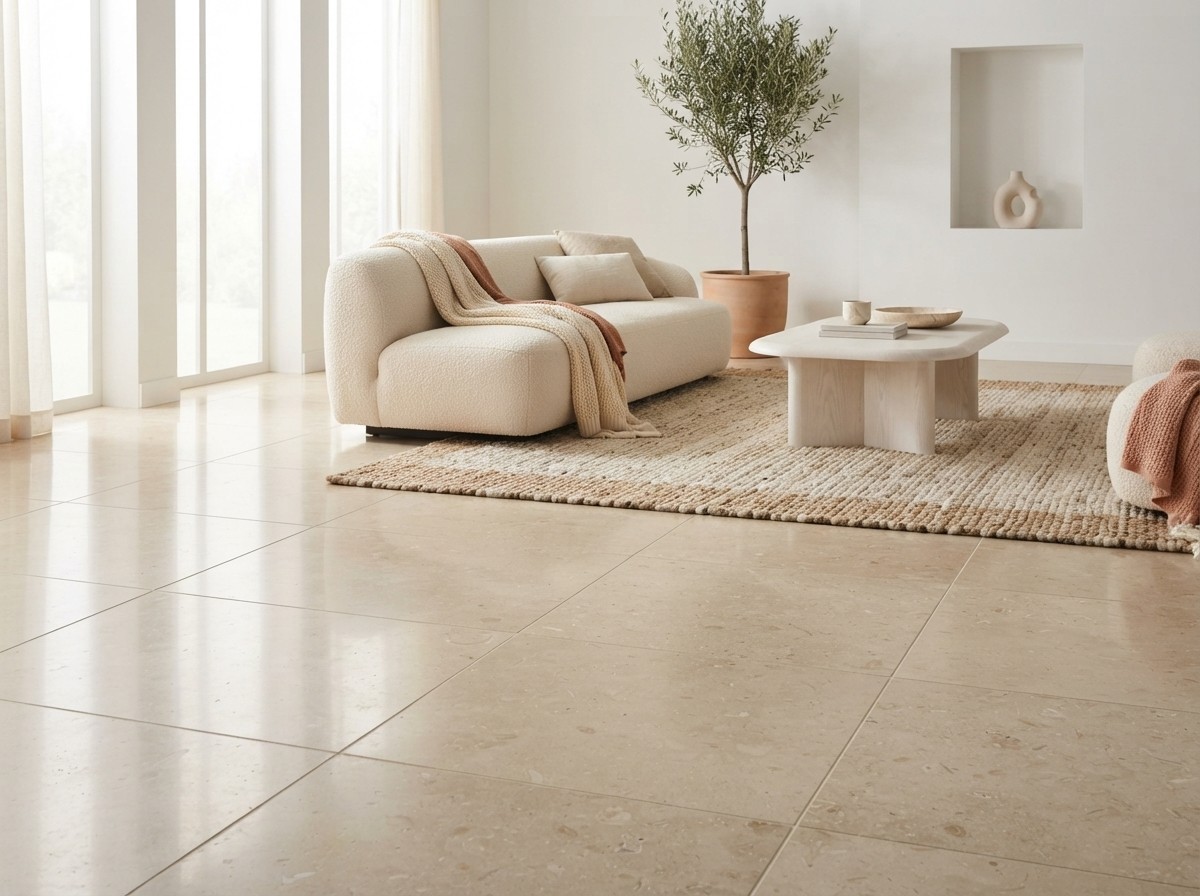
Water absorption is expressed as a percentage of weight, and it quietly governs more of a stone’s behaviour than any other single figure. A low value means a dense, less porous stone that resists staining, is easier to maintain, and performs better in wet or freeze-prone environments.
It is one of the single most useful numbers when choosing stone for bathrooms, pool surrounds, and exteriors, because water is the agent behind so many long-term failures, from unsightly staining to the slow damage of repeated freezing and thawing.
As a rule of thumb, the lower the absorption, the more forgiving the stone will be over its service life. It is the property that most often separates a surface that still looks good in twenty years from one that does not.
Matching Properties to Applications
Different environments stress different properties. A good specification does not chase the highest number on every measure; it identifies the dominant stress of the environment and prioritises the property that answers it.
The pairing is usually straightforward once you name the environment:
Application | Property to prioritise |
|---|---|
Exterior paving & driveways | Compressive & abrasion resistance |
Facade cladding | Flexural strength / modulus of rupture |
Bathrooms & pool areas | Low water absorption |
High-traffic floors | Abrasion resistance |
Match the two deliberately and the stone will do its job quietly for decades. Ignore the pairing, and even a beautiful, expensive stone can disappoint.
Different environments stress different properties. A good specification does not chase the highest number on every measure; it identifies the dominant stress of the environment and prioritises the property that answers it.
The pairing is usually straightforward once you name the environment:
Application | Property to prioritise |
|---|---|
Exterior paving & driveways | Compressive & abrasion resistance |
Facade cladding | Flexural strength / modulus of rupture |
Bathrooms & pool areas | Low water absorption |
High-traffic floors | Abrasion resistance |
Match the two deliberately and the stone will do its job quietly for decades. Ignore the pairing, and even a beautiful, expensive stone can disappoint.
Why Certified Test Data Protects Your Project
Certified data is not paperwork for its own sake. It is what allows a structural engineer to sign off a facade, a specifier to defend a choice, and a client to trust that the material will last.
Because Al Takadom controls its own quarries and processing, the data it provides describes the exact stone that will be delivered, not a generic average pulled from a reference table. The sample that was tested and the material that arrives on site share the same origin.
For specifications that require engineering documentation, that direct link between the tested sample and the delivered material is decisive. It closes the gap where uncertainty, and risk, usually hides.
Certified data is not paperwork for its own sake. It is what allows a structural engineer to sign off a facade, a specifier to defend a choice, and a client to trust that the material will last.
Because Al Takadom controls its own quarries and processing, the data it provides describes the exact stone that will be delivered, not a generic average pulled from a reference table. The sample that was tested and the material that arrives on site share the same origin.
For specifications that require engineering documentation, that direct link between the tested sample and the delivered material is decisive. It closes the gap where uncertainty, and risk, usually hides.
A Simple Discipline for Specifiers
The most reliable specifications follow the same order every time. The discipline is simple, and it protects you from the most common mistake in stone selection: letting appearance override performance.
Choose the stone you love on appearance
Identify the environment’s dominant stress
Request the certified data for that property
Confirm the finish suits the same environment
Follow those four steps and you get the best of both worlds, a surface you love and one that will endure.
The most reliable specifications follow the same order every time. The discipline is simple, and it protects you from the most common mistake in stone selection: letting appearance override performance.
Choose the stone you love on appearance
Identify the environment’s dominant stress
Request the certified data for that property
Confirm the finish suits the same environment
Follow those four steps and you get the best of both worlds, a surface you love and one that will endure.