When the Wall Itself Becomes the Feature
Most walls are meant to disappear behind the life that happens in front of them. A few are designed to do the opposite, to give a building its identity and make it recognisable from the street.
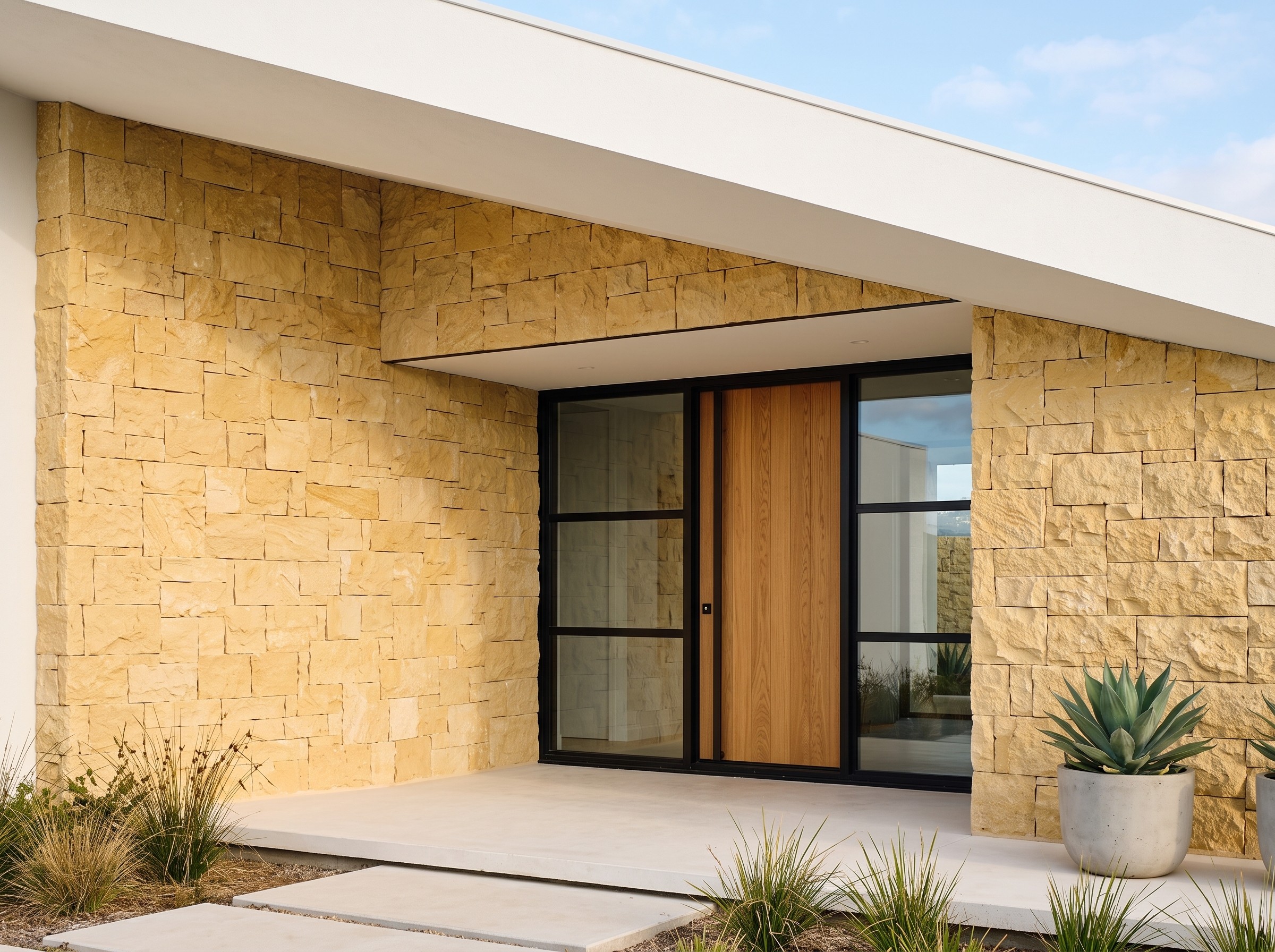
Yellow Limestone Rock Face is made for those walls. It is a warm honey yellow and sandy gold limestone split along its natural cleavage planes to reveal a raw, jagged and deeply three-dimensional surface.
Bold and architectural by nature, it is the stone to choose when raw natural character is the design intention, from villa facades to garden walls.
Most walls are meant to disappear behind the life that happens in front of them. A few are designed to do the opposite, to give a building its identity and make it recognisable from the street.
Yellow Limestone Rock Face is made for those walls. It is a warm honey yellow and sandy gold limestone split along its natural cleavage planes to reveal a raw, jagged and deeply three-dimensional surface.
Bold and architectural by nature, it is the stone to choose when raw natural character is the design intention, from villa facades to garden walls.
Where Rock Face Belongs
A rock face finish is defined by its depth. Its jagged surface catches light and shadow in a way no flat stone can, which is why it is used vertically, where that texture can be seen and appreciated.
Its natural applications are:
Exterior building facades: a bold, textured skin for villas and commercial buildings
Boundary walls: a strong, natural edge that defines the property line
Garden retaining walls: structure for terraced landscapes and raised planting
Outdoor feature walls: sculptural backdrops for courtyards and entrances
Because the surface is raw and uneven, it is not intended for floors, steps or any horizontal surface. Where paving is needed, a bush hammered limestone is the right choice.
A rock face finish is defined by its depth. Its jagged surface catches light and shadow in a way no flat stone can, which is why it is used vertically, where that texture can be seen and appreciated.
Its natural applications are:
Exterior building facades: a bold, textured skin for villas and commercial buildings
Boundary walls: a strong, natural edge that defines the property line
Garden retaining walls: structure for terraced landscapes and raised planting
Outdoor feature walls: sculptural backdrops for courtyards and entrances
Because the surface is raw and uneven, it is not intended for floors, steps or any horizontal surface. Where paving is needed, a bush hammered limestone is the right choice.
How a Rock Face Finish Is Created
Unlike finishes that are ground, polished or blasted, a rock face is revealed by splitting the stone. The block is broken along its natural cleavage planes, exposing the raw texture that formed within the earth.
Because no two splits are identical, every piece carries its own relief. Across a wall, those variations combine into a rich, rhythmic surface with a genuinely handcrafted quality.
The warm honey and sandy gold colours of Yellow Limestone add to the effect. In low morning or evening sun, the shadows deepen and the wall seems to glow, changing character throughout the day.
Unlike finishes that are ground, polished or blasted, a rock face is revealed by splitting the stone. The block is broken along its natural cleavage planes, exposing the raw texture that formed within the earth.
Because no two splits are identical, every piece carries its own relief. Across a wall, those variations combine into a rich, rhythmic surface with a genuinely handcrafted quality.
The warm honey and sandy gold colours of Yellow Limestone add to the effect. In low morning or evening sun, the shadows deepen and the wall seems to glow, changing character throughout the day.
Building Landscapes With Stone
Some of the most beautiful uses of rock face limestone are found in the garden. Terraced retaining walls built in Yellow Limestone give sloping sites structure and turn changes in level into a design feature.
The stone’s warm colour makes planting look especially vivid. Lavender, rosemary, grasses and flowering shrubs all stand out against its golden surface, softening the walls as the garden matures.
The same stone can continue from the garden to the house, linking landscape and architecture through a single, natural material.
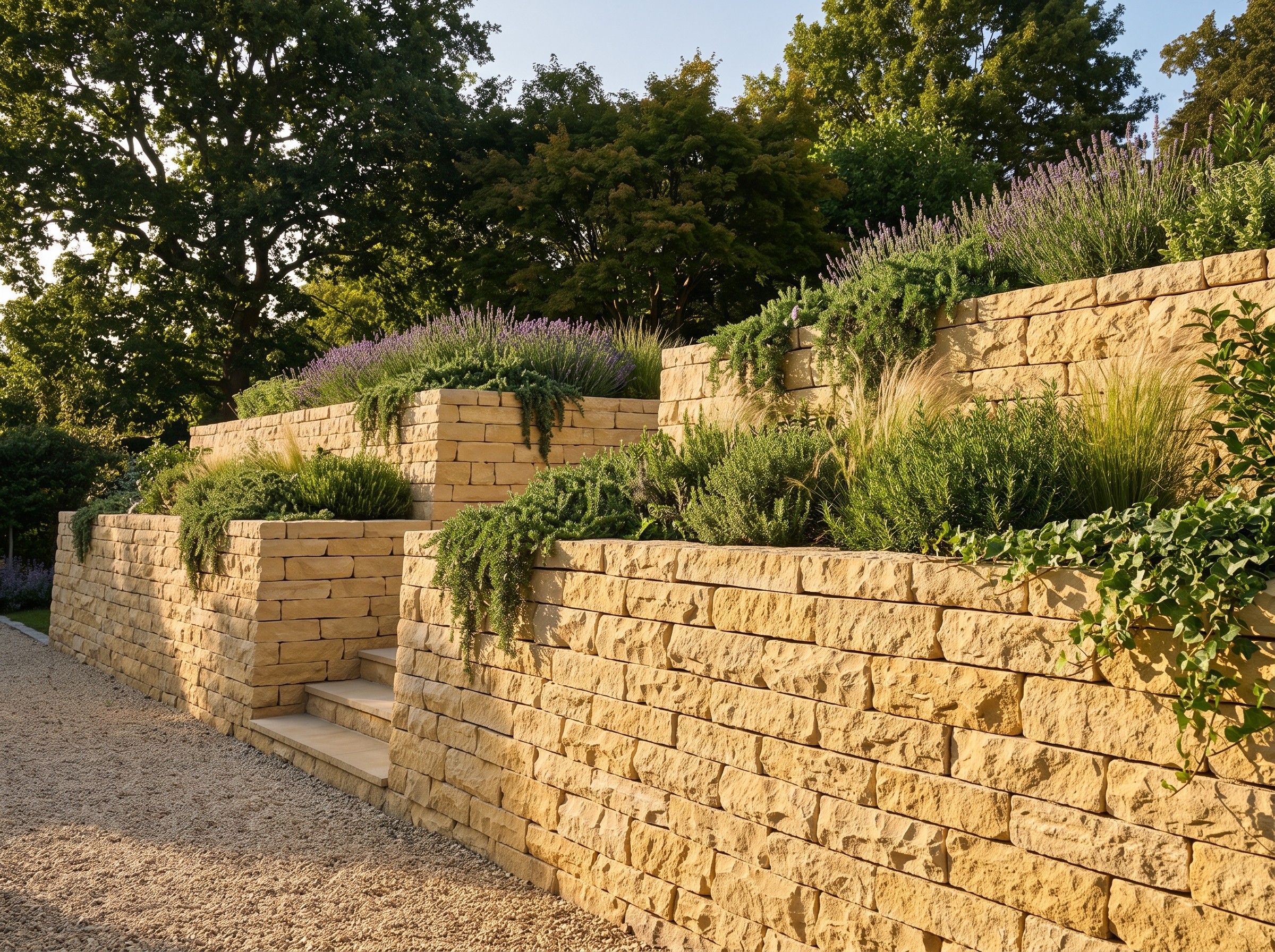
Some of the most beautiful uses of rock face limestone are found in the garden. Terraced retaining walls built in Yellow Limestone give sloping sites structure and turn changes in level into a design feature.
The stone’s warm colour makes planting look especially vivid. Lavender, rosemary, grasses and flowering shrubs all stand out against its golden surface, softening the walls as the garden matures.
The same stone can continue from the garden to the house, linking landscape and architecture through a single, natural material.
Yellow Limestone Rock Face by the Numbers
As a natural limestone, Yellow Limestone is softer and more porous than granite, and its test results reflect that character. It is quarried in Saudi Arabia and finished at Al Takadom’s Jeddah factory.
Its key properties are these:
Property | Result |
|---|---|
Compressive strength | 43.0–78.0 MPa |
Water absorption | 3.36%–5.30% |
Density | 2,441–2,646 kg/m³ |
Flexural strength | 6.7–11.3 MPa |
Modulus of rupture | 11.3 MPa |
Because the stone is porous, it should be sealed to protect it against weathering and moisture penetration, especially on exposed facades and walls that face the prevailing weather.
As a natural limestone, Yellow Limestone is softer and more porous than granite, and its test results reflect that character. It is quarried in Saudi Arabia and finished at Al Takadom’s Jeddah factory.
Its key properties are these:
Property | Result |
|---|---|
Compressive strength | 43.0–78.0 MPa |
Water absorption | 3.36%–5.30% |
Density | 2,441–2,646 kg/m³ |
Flexural strength | 6.7–11.3 MPa |
Modulus of rupture | 11.3 MPa |
Because the stone is porous, it should be sealed to protect it against weathering and moisture penetration, especially on exposed facades and walls that face the prevailing weather.
Specifying a Rock Face Wall
A rock face wall is only as good as its planning. A clear sequence helps:
Confirm the application is vertical cladding, not paving
Agree the pattern and coursing with the architect
Choose square, rectangular or custom-cut units
Plan sealing for every exposed face
Review samples in daylight to judge texture and shadow
With those decisions made early, the finished wall will read exactly as it was designed: bold, natural and full of character.
A rock face wall is only as good as its planning. A clear sequence helps:
Confirm the application is vertical cladding, not paving
Agree the pattern and coursing with the architect
Choose square, rectangular or custom-cut units
Plan sealing for every exposed face
Review samples in daylight to judge texture and shadow
With those decisions made early, the finished wall will read exactly as it was designed: bold, natural and full of character.
A Stone With Presence
Yellow Limestone Rock Face is a material with presence. It gives buildings weight and texture, and it gives gardens a sense of permanence.
It works equally well on contemporary villas, where its raw surface contrasts with clean lines and large glazing, and on traditional architecture, where it recalls the honey-coloured stone of historic buildings.
Whatever the style, it brings the same quality: the feeling that the building has grown out of the land around it.
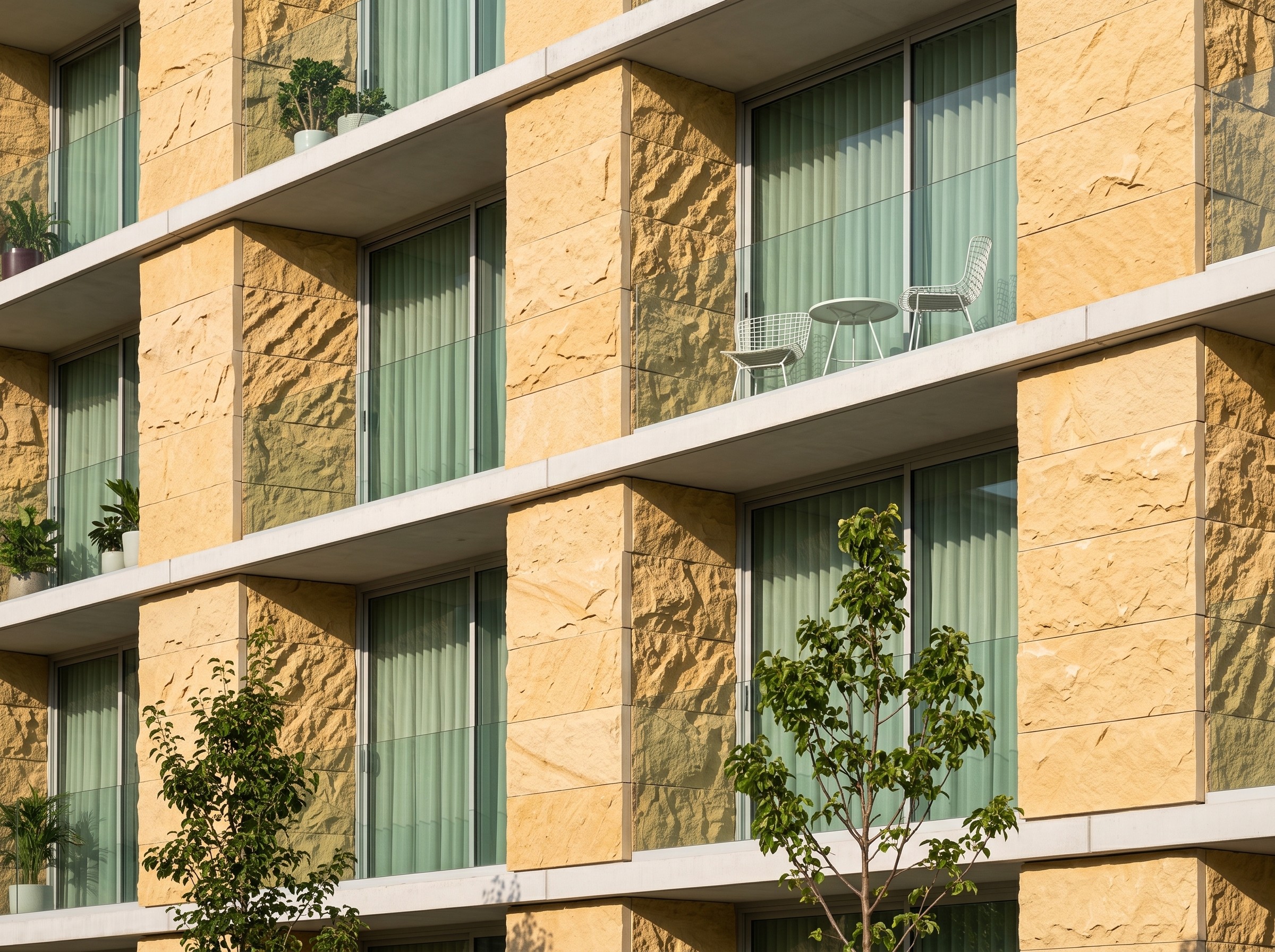
Yellow Limestone Rock Face is a material with presence. It gives buildings weight and texture, and it gives gardens a sense of permanence.
It works equally well on contemporary villas, where its raw surface contrasts with clean lines and large glazing, and on traditional architecture, where it recalls the honey-coloured stone of historic buildings.
Whatever the style, it brings the same quality: the feeling that the building has grown out of the land around it.